Messages
- 3.8
- Rating
- 5.00M
- Installs
- Free
- Price

 Analysis by App-foxy
I approached Messages as a replacement for the ordinary texting app rather than as something I would open for entertainment. That distinction matters. A messaging tool earns its place through small, repeated interactions: checking a new text, replying while busy, finding an old conversation, or arranging a reminder for later. After using it in that everyday rhythm, I found the appeal easy to understand. It keeps the focus on SMS, adds scheduling and smart touches, and avoids turning a simple conversation into a crowded social platform.
Messages is a free communication app from SMS Text Messages, available for Android devices running version 6.0 or later. It is rated for Everyone, and its current version is 1.53. The app has reached over a million installs and holds a 4.0 average from roughly fifteen thousand ratings, which suggests that it has found a substantial audience while still leaving room for individual preferences to shape the experience.
My overall impression is positive, but not unconditional. Its lasting value comes from reducing friction in routine texting, not from replacing every communication service on your phone. If you mainly need a straightforward SMS inbox with useful scheduling, it can become a comfortable daily tool. If your conversations depend on rich media, large groups, encrypted chats, or a broad ecosystem of connected devices, the usual alternatives may remain a better fit.
You May Also Like

 AccuWeather: Weather Radar
AccuWeather Review: A Quick, Clear Forecast for Everyday Decisions
For everyday plans, the best forecast is the one you can understand quickly. AccuWeather makes rain timing, radar, and local conditions easy to act on, with a few trade-offs.

 Hill Climb Racing
Why Hill Climb Racing Still Turns Crashes Into One More Run
A tiny car, a bumpy hill and one more upgrade: Hill Climb Racing keeps resurfacing because its simple chaos makes every near-miss feel personal.

 AliExpress - Shopping App
AliExpress Makes Global Shopping Feel Personal, but Shoppers Bear the Risk
AliExpress turns a global marketplace into a pocket-sized discovery engine. Its reach is useful, its shopping loop compelling, and its trade-offs easy to miss.

 Lords Mobile: Kingdom Wars
Lords Mobile Is a Kingdom-Building Routine, Not a Quick Match
A case-by-case verdict on the building, battles, device demands, and social commitments that make Lords Mobile rewarding for some players and exhausting for others.

 PDF Scanner app - TapScanner
TapScanner Makes Paperwork Easier to Capture, Check, and Share
TapScanner makes scanning with a phone feel less like a rescue operation and more like a dependable step in getting work done. Its capture tools are useful, though not flawless.

 Block Blast!
 Shows How Much a Puzzle Game Can Leave Out
A quiet grid game shows why puzzle players increasingly value instant clarity, repeatable skill and low-pressure play—and where the genre still needs to catch up.
More From Our News Desk
View All News


What feels good during the first week
During the first week, I would pay attention to whether the familiar texting flow feels comfortable before judging the extra tools. A useful test is to schedule one low-stakes message, then see whether preparing it ahead of time fits naturally into your day. That early trial gives a clearer picture of the app’s appeal and leads to the question of which parts remain worthwhile once the novelty passes.
A familiar starting point for everyday texting
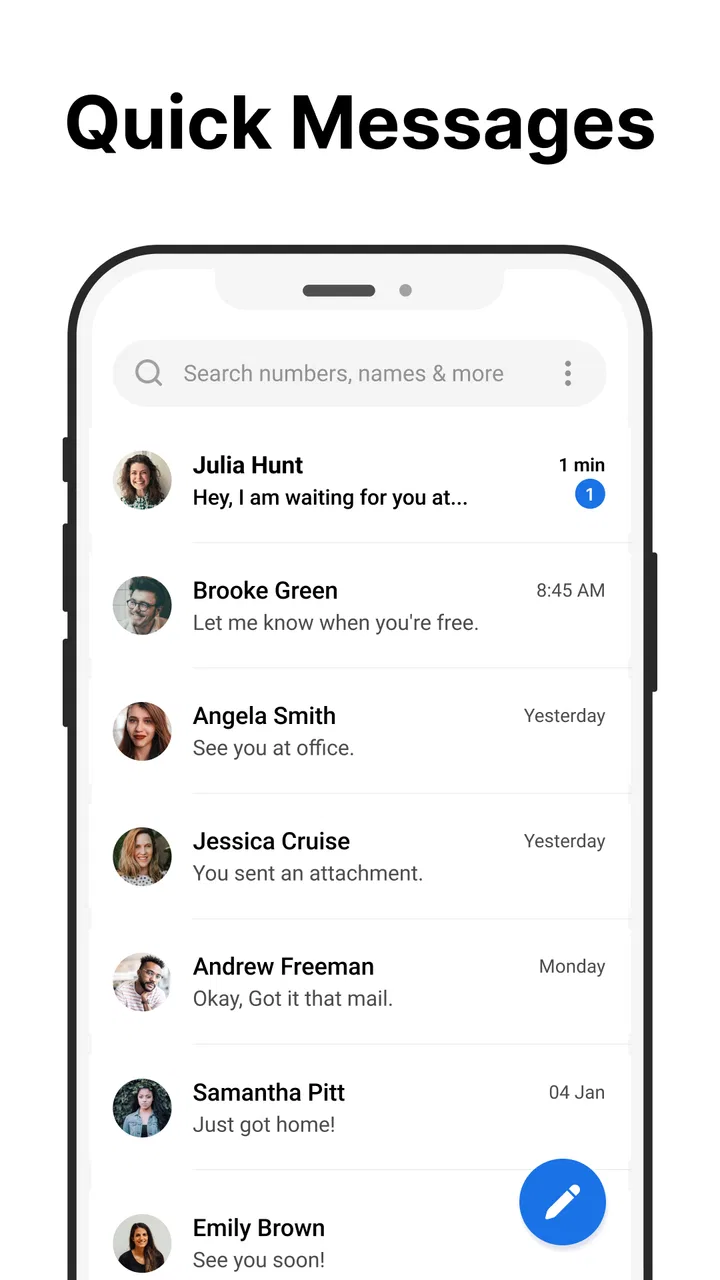
The first thing I noticed is how quickly the app makes sense. There is no long learning period before sending a message. The basic flow is the one I already expect from a conventional texting application: open a conversation, read the latest messages, write a reply, and send it. That familiarity is valuable because communication software should not make me think about the interface when I am trying to answer someone.
This makes the app particularly approachable for people who want to move away from a cluttered default messenger without learning a completely different system. It also suits a secondary phone, a family device, or anyone who prefers SMS to a social messaging network. The Everyone age rating reinforces that broad, uncomplicated positioning, although the practical experience still depends on the phone and messaging setup where it is installed.
I would not describe the design as a dramatic reinvention of texting. That is actually one of its strengths. The app does not need to persuade me to adopt a new communication habit before it becomes useful. Its job is to make the existing habit feel a little more organized and convenient.
Scheduling is the feature that changes behavior
Scheduling is more meaningful than it sounds because it solves a very specific problem: I may know what I want to say now, but the recipient may not be ready to receive it now. A scheduled message lets me prepare a reminder, greeting, or practical note while it is on my mind and choose a more suitable delivery time.
A realistic example is planning a message to a family member about an early appointment. Instead of writing it late at night and disturbing them, I can prepare it in advance for a reasonable morning time. Another use is a work-related reminder that I want to send during the recipient’s normal hours rather than when I happen to remember it. The benefit is not flashy; it is the removal of one more thing from my mental to-do list.
There is also a useful distinction between scheduling and setting a reminder for myself. The app is designed around sending the message to another person, so I would not treat it as a full task-management system. For personal deadlines, a calendar or reminder app is still safer. For messages I already know I need to send, however, scheduling is a practical addition that can become part of a weekly routine.
Small smart touches are most useful when they stay out of the way
The app’s smart features are best judged by how little attention they demand. I prefer assistance that helps me compose or manage a text without making the conversation feel automated. In practice, the value of these touches depends on the kind of messages I send. Short, routine communication benefits more than expressive conversations where tone and context matter.
My advice is to treat the smart tools as optional support rather than as a reason to surrender control of every reply. Before sending anything important, I would still read the wording carefully. A message to a close friend can tolerate casual shorthand, while a note to a customer, teacher, or colleague may need a more deliberate tone. Convenience is useful, but it should not replace judgment.
Who gets the strongest first impression
The best early experience is likely for someone who sends many ordinary SMS messages and wants a cleaner, more capable place to handle them. It is also a sensible option for users who regularly think of messages at inconvenient times, such as during commuting, late in the evening, or between appointments.
I am less convinced for someone whose communication is already centered on services such as WhatsApp, Signal, Telegram, or another internet-based messenger. Those platforms can offer features that SMS apps generally cannot match, including richer group communication and deeper media sharing. Installing this app will not automatically bring those conversations into the same environment, so the benefit depends on whether SMS remains an important part of the user’s routine.
What remains useful after the novelty fades
After the novelty fades, the best measure is whether scheduling supports a recurring need rather than becoming a feature I open just to explore. I would reserve it for predictable messages, such as a reminder or a planned greeting, and keep changing arrangements in the conversation itself. That distinction helps clarify what the app can contribute over time—and what it takes to keep it dependable.
The month-to-month test is about repeated habits
After the initial curiosity disappears, a messaging app survives only if it improves actions I repeat every day. Messages has a reasonable chance of doing that because its central task never becomes obsolete: people still need to read and send texts. The scheduling feature gives it a second recurring use, especially for reminders, planned greetings, and messages that should arrive at a particular moment.
I found that the app’s value is strongest when I create a simple personal workflow. I can draft a message as soon as I remember the task, schedule it when appropriate, and then stop carrying it around mentally. That is a small but genuine improvement over relying on memory. The workflow works best when I reserve it for messages with a clear purpose instead of scheduling every casual reply.
Another useful habit is keeping conversations purposeful. Since the app is focused on SMS rather than acting as a broad social feed, it encourages me to open it with an intention: answer a question, confirm a plan, or send information. That narrow focus can be refreshing for anyone tired of communication apps that mix messages with channels, stories, recommendations, and other distractions.
Where it compares well with the usual default messenger
The clearest comparison is with the messaging application already installed on an Android phone. The default option may be perfectly adequate for basic texting, so Messages needs to earn the switch through convenience rather than novelty. Scheduling and its smart-oriented approach are the main reasons I would consider changing. If I frequently plan texts or appreciate a more focused interface, those additions can justify keeping it installed.
On the other hand, a default messenger may feel more deeply integrated with the phone. That can matter for notifications, contact handling, backup habits, or other system-level expectations. I would not change apps casually on a phone that already works well. I would first test the new one with normal conversations, confirm that notifications behave as expected, and make sure the app fits the way I already manage texts.
Where internet messaging services still win
Compared with internet-based communication platforms, this app has a narrower purpose. Services built around data messaging are often better for active group chats, frequent photo and video exchange, voice communication, or conversations that span several devices. They may also be where a person’s friends and family already spend their time.
That does not make Messages inferior; it makes the choice situational. I would use it for contacts who communicate by SMS, appointment-related messages, practical family updates, and situations where a conventional text is the expected channel. I would not expect it to become my only communication app if my social life already runs through several richer services.
A less obvious strength: separating preparation from delivery
One of the more useful ideas here is that composing and sending do not have to happen in the same moment. That separation changes how I handle interruptions. If I remember an important message while busy, I can prepare it and decide when it should go out instead of either sending immediately or risking that I will forget it.
This is especially helpful for people who work irregular hours, coordinate with family members in different routines, or prefer not to send nighttime messages. It also reduces the temptation to keep a conversation open while waiting for the “right” moment. The trade-off is that scheduled communication requires confidence that the message will still be correct when it is delivered. If plans change often, I need to review scheduled texts rather than treating them as automatic truth.
Another practical insight: use it for predictable communication, not emotional conversations
Scheduling is excellent for predictable information, but I would be cautious with sensitive or emotionally complicated messages. A message written in a hurry can sound different from what I intended, and a scheduled delivery can remove the natural timing that helps a conversation feel human. For personal discussions where tone matters, I prefer to write and send in the moment after rereading the text.
This is an important boundary because the feature can encourage over-automation. The app is most helpful when it handles logistics, not when it tries to manage relationships. Used selectively, it saves attention. Used everywhere, it can make communication feel distant or create confusion when circumstances change.
The maintenance burden of keeping it in daily use
Keeping a messaging app in daily use should not require much attention, but moving an SMS routine is worth checking carefully at first. I would confirm that incoming notifications arrive as expected and revisit scheduled texts when plans change, especially if a message depends on an appointment or other detail. Those small checks are part of the ongoing upkeep, and they also point to the kinds of friction that can accumulate.
Setup should be treated as a transition, not a casual experiment
Changing a primary SMS application deserves more care than downloading an occasional utility. I would install Messages, open existing conversations, check how contacts appear, and test both an incoming and outgoing text before making it the center of my routine. That short trial can reveal whether the layout and notification behavior suit me without putting important conversations at risk.
I would also avoid uninstalling the previous messenger immediately. Keeping a fallback during the first few days is sensible, particularly if I depend on text messages for appointments, deliveries, work coordination, or family communication. The app itself may be straightforward, but changing a communication hub always creates a small adjustment period.
Scheduled messages need occasional supervision
The feature that adds the most value also creates the main maintenance task. A scheduled message is easy to forget because it leaves my immediate attention. For recurring plans, I would make a quick habit of checking upcoming scheduled texts whenever an appointment or arrangement changes. That is the difference between using scheduling responsibly and assuming it will always remain accurate.
This is not a reason to avoid the feature. It is simply a trade-off: I exchange immediate effort for future convenience, and future convenience needs a little review. If I schedule only clear, low-risk messages, the burden stays small. If I use it for changing plans, prices, directions, or time-sensitive details, I need to be more careful.
Free does not mean every part of the experience is cost-free
The app is free to download and use as its basic offering, but it includes in-app purchases priced at $49.99 per item. That makes it important to distinguish the free entry point from optional paid elements. I would explore the core texting workflow before spending anything and decide whether the additional value is relevant to my actual habits.
The presence of a high-priced individual purchase means I would not recommend buying impulsively just because I like the interface during the first week. A long-term decision should come after I know whether scheduling and the smart features genuinely save me time. For many users, the free experience may be enough; for others, an optional purchase could make sense only if it supports frequent, meaningful use.
Compatibility and expectations on older phones
Support for Android 6.0 and later gives the app a broad compatibility range. Still, I would separate operating-system support from the feel of a particular device. Older phones can differ in speed, notification handling, storage, and manufacturer-level battery controls. Those factors can affect any messaging app, especially one expected to alert me promptly.
For that reason, I would test notifications rather than assuming they will behave identically across every phone. If a scheduled message or new incoming text matters, I would make sure the app is allowed to operate normally under the device’s own battery and background settings. This is practical maintenance, not a criticism unique to the app, but it matters more here because reliable timing is one of its defining benefits.
What may cause fatigue over time
Over time, fatigue is more likely if the app’s smart assistance feels out of step with my own voice or if I rarely use its distinctive tools. I would treat suggestions as optional and reread anything important before sending, rather than letting speed take priority over tone. For people who prefer a highly expressive or feature-rich chat service, that trade-off may become more noticeable with regular use.
Basic texting can make the app feel replaceable
The biggest long-term challenge is that the core function is familiar. If I never schedule messages and do not use the smart tools, the app may feel very close to other SMS options. A clean interface is pleasant, but pleasant alone may not be enough to justify changing a messenger that already handles my conversations well.
This is why I would judge it by actual frequency of use rather than by the first impression. If the app solves a repeated problem, it earns a permanent place. If I only open the extra features once and then return to ordinary texting, the novelty will fade quickly.
SMS remains a limited communication channel
No interface can remove the underlying limits of SMS. The app can make texting more comfortable, but it does not transform every conversation into a modern internet chat. People who need extensive media sharing, large collaborative groups, or a communication service built around multiple connected devices may eventually feel constrained.
I would also avoid expecting the app to replace a dedicated organization tool. Scheduling a message is not the same as managing a project, tracking a deadline, or maintaining a detailed calendar. The more complex the task, the more likely I am to pair this app with another tool rather than forcing it to handle responsibilities it was not designed to own.
Smart assistance can become tiring if it interrupts my voice
Smart features are useful when they reduce work, but they can become irritating if they make simple writing feel over-processed. My preference is to keep control of wording and use assistance only when it helps with a routine message. For personal texts, I want the result to sound like me, including the natural imperfections that make a conversation feel genuine.
That makes the app a better fit for users who appreciate optional help than for people looking for an aggressively automated communication experience. The more particular I am about tone, the more I would treat smart suggestions as a starting point rather than a finished reply.
Switching costs can outweigh small improvements
There is also a psychological cost to changing a familiar messenger. Even a good alternative can feel inconvenient while I learn where actions are located and adjust to a different conversation view. If my current app already provides the features I use, Messages may not offer enough improvement to justify that transition.
My practical rule is simple: switch when I can name the repeated problem I want solved. “I want a new messaging app” is weak motivation. “I regularly forget to send planned texts” or “I want a more focused SMS workspace” is much stronger. That test prevents the app from becoming another unused download.
My long-term verdict on keeping it installed
Messages earns lasting space most convincingly as a focused SMS tool with scheduling at its center. I like it for practical communication that benefits from preparation: reminders, family coordination, planned greetings, and messages that should arrive at a considerate time. Those uses create recurring value, and they are specific enough to survive after the initial curiosity has gone.
I would recommend it to an Android user who wants more than the most basic texting workflow but does not need a full social communication platform. The free starting point makes it easy to evaluate, the Everyone rating keeps its audience broad, and the support for Android 6.0 and later makes it accessible on a wide range of devices. Its 4.0 average across around fifteen thousand ratings also feels consistent with my balanced view: useful and well-liked, but not a universal replacement for every messenger.
I would skip it if my conversations are mainly in encrypted internet messengers, if I depend heavily on advanced group communication, or if my current SMS app already handles scheduling and smart assistance in a way I enjoy. I would also think twice before paying for an optional item until the free workflow has become part of my routine, especially with an in-app purchase reaching $49.99 per item.
In the end, the app does not need to be spectacular to be worthwhile. It needs to make a repeated task easier without adding new work. For me, scheduled texting is the feature that gives it a real reason to stay installed, while the focused approach keeps it comfortable for everyday SMS. If your communication life still depends on ordinary text messages, Messages is worth trying—but its permanent place should be earned through a habit you actually use, not through the promise of features you rarely open.
FAQs for Messages
01What features does the Messages app offer?
The Messages app provides a seamless texting experience with features like group chats, multimedia sharing, and customizable notifications. It also supports voice messages, emojis, and GIFs, enhancing communication. For those using the app on Android, integration with Google services allows for additional functionalities like Smart Reply and Google Assistant.
02Is the Messages app secure for private conversations?
Yes, the Messages app prioritizes user privacy and security. It incorporates end-to-end encryption for one-on-one conversations, ensuring that messages are only visible to the sender and the recipient. However, group messages may not have the same level of encryption, so it's important to be mindful of what you share.
03Can I use the Messages app on multiple devices?
The Messages app can be accessed on various devices, although its functionality may differ between Android and iOS. On Android, it supports desktop access through a browser. For iOS users, iCloud can sync messages across Apple devices, allowing for a seamless experience when switching between an iPhone, iPad, or Mac.
04Does the Messages app require an internet connection?
While the Messages app primarily uses mobile data or Wi-Fi for sending and receiving messages, it also supports SMS and MMS, which operate over cellular networks. This means you can still send texts without an internet connection, though some advanced features like multimedia messaging may be limited.
05How does the Messages app handle multimedia files?
The Messages app allows users to send and receive various multimedia files, including photos, videos, and audio recordings. These files are compressed to save data and maintain quick delivery times. Users can also edit images or add text and stickers before sending, providing a personalized touch to communications.
Pros
- Intuitive and user-friendly interface.
- Supports SMS and MMS seamlessly.
- Customizable themes and chat settings.
- Efficient group messaging capabilities.
- Reliable message delivery notifications.
Cons
- Limited customization for notification tones.
- Lacks advanced security features.
- No built-in spam filtering options.
- Cannot schedule messages for later.
- Requires internet for multimedia sending.

Messages
Gallery